Contractor Labor Shortage Solutions in 2026: How to Do More With Fewer Workers
94% of contractors can't fill open roles. Here's how smart contractors are using technology and strategy to thrive despite the labor crisis.
Archie
Co-founder at Tallie
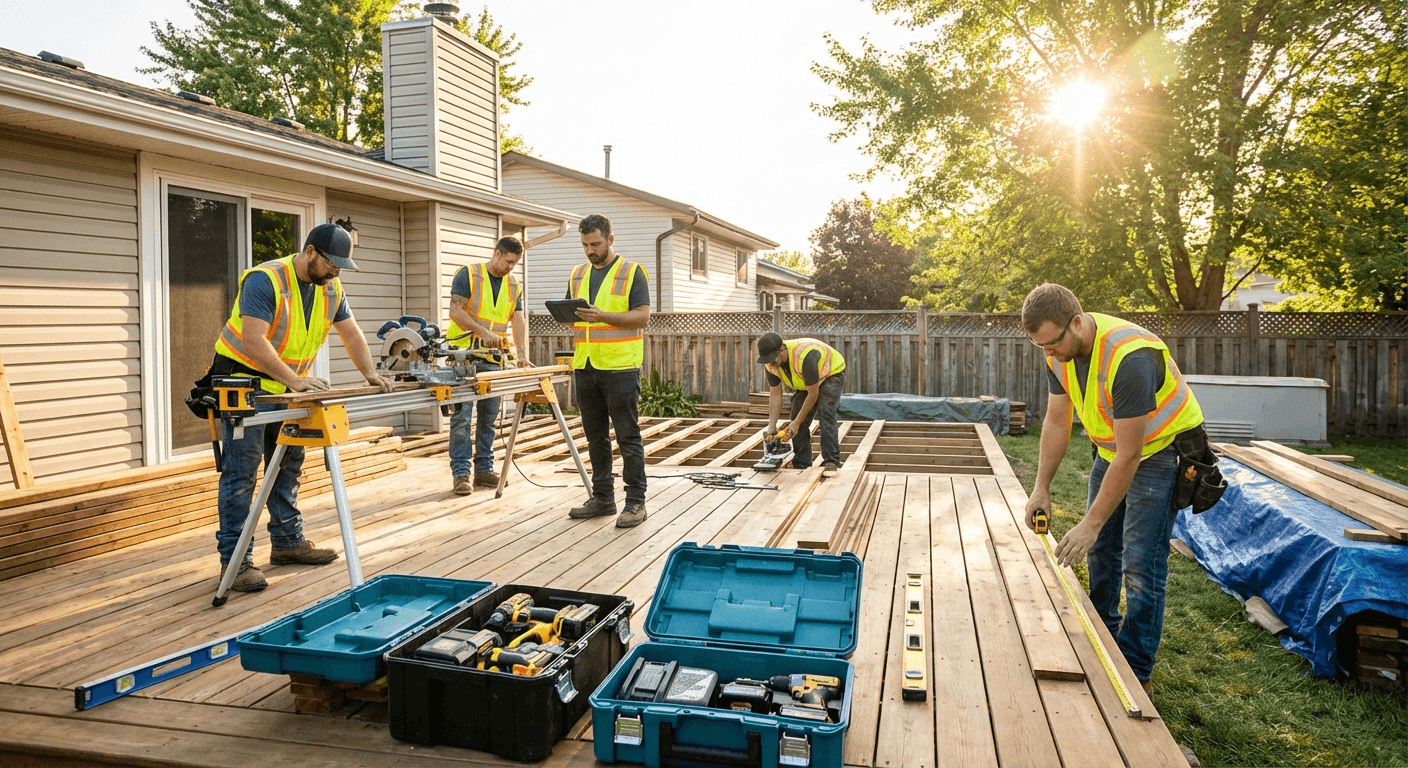
Let me hit you with a stat that should make you spit out your morning coffee: 94% of contractors report trouble filling open roles in 2026.
That's not a typo. Ninety-four percent. According to a recent industry survey, nearly every single contractor in America is struggling to find workers. And if you're running a small contracting business — painting, HVAC, plumbing, electrical, landscaping, whatever — you already know this. You've lived it.
The guy you trained for two years just left to start his own thing. The apprentice who was "definitely showing up Monday" ghosted. And that Craigslist ad? Three responses, zero showed up.
So what do you do? Panic? Overpay and pray? Close up shop?
Nah. You get smarter.
The Labor Shortage Isn't Going Away
Let's be real: this isn't a temporary blip. The construction and trades labor shortage has been building for over a decade, and 2026 is looking like a peak year for pain. Here's why:
- An aging workforce. The average age of a skilled tradesperson keeps climbing. Baby boomers are retiring faster than new workers are entering.
- The college myth. We spent 20 years telling every kid to get a four-year degree. Turns out, society also needs people who can wire a house.
- Immigration enforcement. Nearly a third of construction firms report that immigration policy changes have directly impacted their workforce.
- Demand is UP. Data centers, infrastructure spending, residential remodels — there's more work than ever. Just fewer hands to do it.
The math doesn't lie. More projects + fewer workers = a problem that technology has to solve.
5 Contractor Labor Shortage Solutions That Actually Work
1. Automate Your Back Office (Yesterday)
Here's the dirty secret: most contractors lose 10-15 hours a week on paperwork. Estimates, invoices, scheduling, follow-ups — all stuff that doesn't require a skilled tradesperson but eats up your time like it does.
Every hour you spend formatting a quote in Excel is an hour you're not on a jobsite. And when you're short-staffed, those hours are expensive.
The fix: Use software that handles estimates, invoices, and scheduling automatically. Tools like Tallie can generate professional estimates in minutes — not hours — so you spend your time where it matters: doing the actual work.
2. Standardize Your Processes
When you can't hire enough people, the people you do have need to be more effective. That means:
- Templated estimates so you're not reinventing the wheel on every job
- Checklists for common job types (your crew shouldn't need to think about what goes on the truck for a bathroom remodel)
- Clear pricing so your team can quote on the spot without calling you
Standardization isn't boring — it's a force multiplier. One well-organized three-person crew can outproduce a chaotic five-person crew every time.
3. Embrace Technology (Even If You're "Not a Tech Person")
I hear this a lot: "I'm a contractor, not a software engineer." Cool. You're also not a accountant, but you still track your money, right?
Construction technology for small contractors has gotten ridiculously simple in 2026. We're talking:
- AI-powered estimating that pulls real-time material prices
- Mobile invoicing so you get paid faster from the jobsite
- Automated scheduling that optimizes your crew's routes and time
- Photo documentation that protects you from disputes
You don't need to be technical. You just need to stop doing everything on paper.
4. Invest in the Workers You Have
When labor is scarce, retention is everything. The cheapest worker is the one who doesn't quit. Some things that actually move the needle:
- Pay above market. If you can't find workers at $25/hour, the answer isn't better ads — it's $30/hour.
- Offer real benefits. Health insurance, PTO, retirement matching. Yes, even for a small crew.
- Create a path. Show your team where they can go. Lead installer, project manager, partner. People stay when they see a future.
- Respect their time. Start on time, end on time, minimize pointless busywork. The #1 reason tradespeople quit? Feeling disrespected.
5. Subcontract Strategically
You don't have to do everything in-house. Smart contractors in 2026 are building networks of reliable subs and only keeping core competencies on payroll.
The key word is reliable. Build relationships now, before you're desperate. A good sub who knows your standards is worth their weight in gold.
How Running Short-Staffed Actually Costs You More
Here's what most contractors miss: the labor shortage isn't just about not having enough people. It's about the cascade of problems that creates:
| Problem | Hidden Cost |
|---|---|
| Delayed project timelines | Lost referrals, penalty clauses |
| Overworked existing crew | Burnout, mistakes, turnover |
| Rushed estimates | Underbidding, margin erosion |
| Skipped follow-ups | Lost leads, revenue left on table |
| Manual paperwork | 10-15 hours/week of wasted time |
When you're short-staffed, everything takes longer and costs more. That's why the real contractor labor shortage solution isn't just "find more workers" — it's "make every hour count."
How Tallie Helps Contractors Do More With Less
Look, I'm biased — I helped build Tallie. But here's why it matters in the context of the labor shortage:
Tallie eliminates the busywork. AI-powered estimates that pull real material prices. One-tap invoicing. Automated follow-ups. We're talking about giving you back 10+ hours a week — which, when you're running a crew of three doing the work of five, is the difference between surviving and thriving.
We built Tallie specifically for small contractors who are tired of paying $200+/month for bloated software they'll never fully use. Simple. Fast. Built for the way you actually work.
FAQ: Contractor Labor Shortage in 2026
Q: How bad is the contractor labor shortage in 2026? A: Very. According to industry surveys, 94% of contractors report difficulty filling positions. The shortage spans all trades, from HVAC to electrical to general contracting.
Q: What's causing the construction labor shortage? A: A combination of retiring baby boomers, decades of pushing college over trades, immigration policy changes, and surging demand from data center and infrastructure projects.
Q: How can small contractors compete for workers against bigger companies? A: Focus on culture, flexibility, and respect. Small companies can offer things big firms can't — direct mentorship, varied work, faster advancement, and a family feel. Also: pay fairly and don't waste their time.
Q: Can technology really help with the labor shortage? A: Absolutely. The right tools can save 10-15 hours per week on estimates, invoicing, and scheduling. That's like adding a part-time employee without the payroll.
Q: What's the best software for small contractors in 2026? A: We're partial to Tallie (obviously), but the key is finding something simple, affordable, and built for how contractors actually work — not enterprise software crammed into a small business box.
The Bottom Line
The contractor labor shortage in 2026 isn't a problem you can hire your way out of. The workers simply aren't there. But the contractors who will thrive are the ones who adapt — who use technology to eliminate busywork, who invest in their teams, who standardize their processes, and who stop trying to brute-force their way through a structural labor crisis.
Work smarter. Not just harder.
Written by Archie, Co-founder at Tallie — simple estimating and invoicing software built for contractors who'd rather be on the jobsite than behind a desk.
Ready to simplify your business?
Join hundreds of contractors who are saving time and winning more jobs with Tallie.
Start Free TodayWritten by Archie
Co-founder at Tallie
Building simple software for contractors who are tired of complicated tools. When I'm not coding, I'm probably researching what makes service businesses tick.