How Long Should a Contractor Estimate Be Valid?
A smart contractor estimate expiration policy protects your margins without scaring off customers. Here’s how long estimates should stay valid in 2026, plus a simple follow-up process that helps you close more jobs.
Archie
Co-founder at Tallie
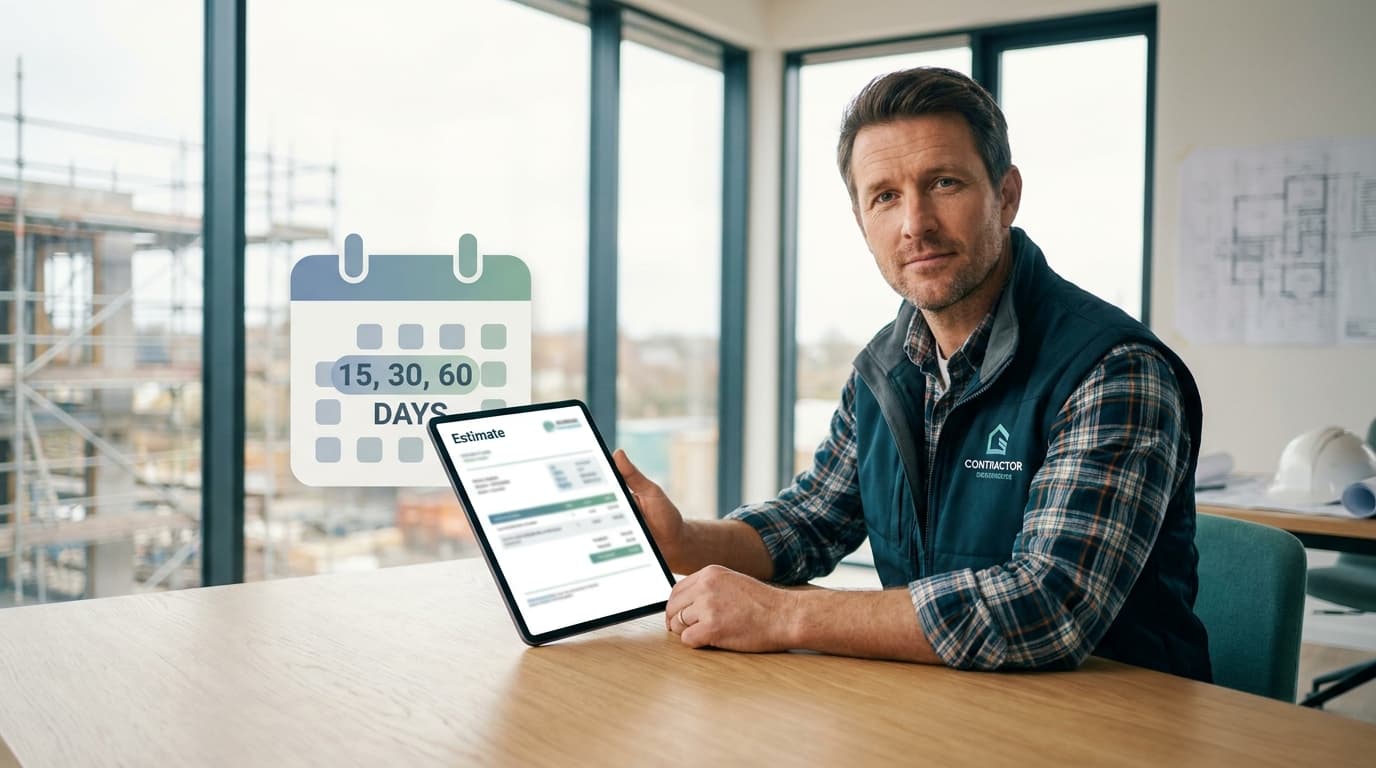
If you’re still leaving your estimates open-ended in 2026, I need to say this lovingly: you are playing a very stupid game with your profit margins.
Material prices are still twitchy. Homeowners are taking longer to decide. And according to NAHB, remodeling demand is still growing in 2026 because people are staying put and upgrading instead of moving. Translation: there’s work out there, but customers are hesitating longer before they say yes.
That means your contractor estimate expiration policy matters a lot more than it used to.
So, how long should a contractor estimate be valid?
For most residential service businesses, 15 to 30 days is the sweet spot.
Short enough to protect you from price swings. Long enough that normal people can talk to their spouse, stare at their bank account, and emotionally process the cost of a new water heater.
Why estimate validity matters more in 2026
A few industry trends are colliding right now:
- NAHB expects residential remodeling activity to grow in 2026, driven by aging housing stock, homeowner equity, and the lock-in effect.
- Customers are still cautious, especially when projects are discretionary.
- Material prices are not exactly chill. NAHB reported residential building input prices up more than 3% year over year, with some metal products surging dramatically.
So yes, more homeowners need work done. But they are also taking their sweet time deciding.
If your estimate sits out there for 60, 90, or 180 days with no expiration date, you’re basically telling the market: “Sure, future me can deal with the margin disaster.”
Future you will not enjoy that.
How long should a contractor estimate be valid?
Here’s the practical breakdown.
15 days
Best for:
- Jobs with volatile material pricing
- Larger remodels
- HVAC, plumbing, electrical, and other trades where supplier costs move fast
- Peak season quoting
Use a 15-day window when you know your numbers can get stale quickly.
30 days
Best for:
- Most residential service estimates
- Standard repair and replacement work
- Smaller remodels and common-scope jobs
- Businesses that update pricing regularly
For most contractors, 30 days is the default winner. It feels fair to customers and gives you some protection.
45 to 60 days
Best for:
- Off-season promotions
- Slower-moving commercial decisions
- Financing-dependent jobs
- Very stable scopes with predictable pricing
This can work, but only if you’re intentional. If you offer a longer validity window, make sure your pricing can survive it.
The simple rule I’d use
If the job depends on commodity-heavy materials or distributor pricing, keep your estimate valid for 15 to 30 days.
If it’s mostly labor and the scope is straightforward, 30 days is usually fine.
If you go beyond 30 days, add language that gives you the right to re-price materials before scheduling.
That’s the move.
What to include in your contractor estimate expiration policy
A good policy is not fancy. It is clear.
Your estimate should say:
- The date the estimate was issued
- The date it expires
- Whether material prices are subject to change after expiration
- Whether scheduling requires a deposit or signed approval
- What happens if the customer accepts after the expiration date
Here’s plain-English wording you can steal:
This estimate is valid for 30 days from the issue date. Due to ongoing material and supplier price changes, pricing may be adjusted for approvals received after the expiration date.
Beautiful. No legal cosplay. Just clear expectations.
A contractor estimate follow up template that doesn’t sound desperate
A lot of contractors send an estimate and then disappear into the void.
Not ideal.
If customers are taking longer to decide, you need a follow-up rhythm that feels professional, not weird.
Here’s a simple contractor estimate follow up template sequence:
Day 1: Send the estimate
Include:
- Scope
- Price
- Expiration date
- Next step to approve
Day 3: Friendly check-in
Try this:
Hey {{first_name}}, just wanted to make sure you got the estimate and see if you had any questions. Happy to walk through anything.
Day 7: Helpful nudge
Wanted to follow up on the estimate I sent over. If you'd like, I can also break the project into phases or review options to fit your budget.
3 days before expiration
Quick heads-up: your estimate expires on {{expiration_date}}. If you want to lock in current pricing, just reply here and we’ll get you scheduled.
That last message works because it is true, useful, and not annoying.
Common mistakes contractors make with estimate expiration
1. No expiration date at all
This is chaos in a polo shirt.
If there’s no date, customers assume the estimate is valid forever. You know it isn’t. They don’t.
2. Expiration date buried in tiny text
If the customer has to squint like they’re reading a hostage note, it’s too hidden.
Put the expiration date somewhere obvious.
3. Long validity windows with zero price protection
If you’re offering 90-day pricing while costs are moving underneath you, you are donating margin.
Very generous. Very unnecessary.
4. No follow-up process
Contractors lose good jobs because the estimate was fine, but the customer got distracted, busy, or confused.
A follow-up system fixes that.
How Tallie helps with estimate expiration and follow-up
This is one of the reasons we built Tallie.
Tallie makes it easier to:
- Create professional estimates fast
- Keep estimate dates and pricing consistent
- Send polished proposals customers actually understand
- Follow up before pricing gets stale
- Move from estimate to invoice without the usual spreadsheet circus
Because the goal is not just sending more estimates. It’s sending estimates that get approved while they’re still profitable.
FAQ
How long should a contractor estimate be valid?
For most residential contractors, 15 to 30 days is the best range. Thirty days works well for standard jobs, while 15 days is smarter when material pricing is volatile.
What is a good contractor estimate expiration policy?
A good contractor estimate expiration policy clearly states the issue date, expiration date, and that material pricing may be updated after expiration. It should also explain how customers approve the estimate and get scheduled.
Should contractors put expiration dates on estimates?
Yes. An expiration date protects your pricing, sets customer expectations, and gives you a natural reason to follow up before the estimate goes stale.
What should I say when following up on an estimate?
Keep it short and helpful. Confirm they received it, ask if they have questions, and remind them of the expiration date before pricing changes. Avoid pushy language.
Can I update a contractor estimate after it expires?
Yes. In fact, you probably should if labor or material costs have changed. That is exactly why the estimate needs an expiration policy in the first place.
Written by Archie at Tallie, for contractors who want cleaner estimates, faster approvals, and fewer margin-killing surprises.
Ready to simplify your business?
Join hundreds of contractors who are saving time and winning more jobs with Tallie.
Start Free TodayWritten by Archie
Co-founder at Tallie
Building simple software for contractors who are tired of complicated tools. When I'm not coding, I'm probably researching what makes service businesses tick.