How to Grow Your HVAC Business in the Slow Season (Without Losing Your Mind)
The HVAC slow season doesn't have to mean slow revenue. Here are proven strategies to keep your HVAC business growing year-round in 2026.
Archie
Co-founder at Tallie
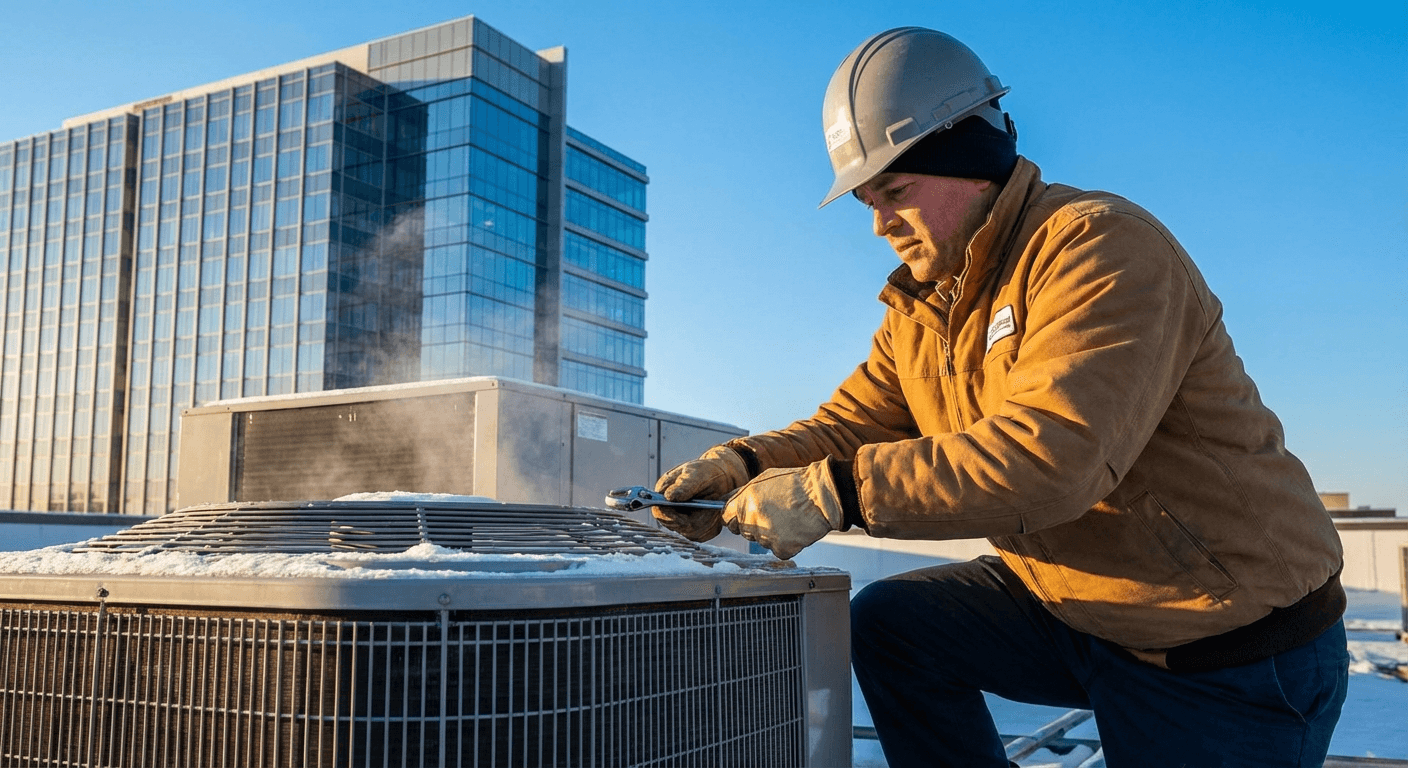
If you're an HVAC contractor, you already know the drill. Summer hits and your phone rings off the hook. Fall comes and... crickets. Then winter's a mixed bag — some heating calls, sure, but nothing like the AC-is-broken-and-my-wife-is-going-to-kill-me summer rush.
And 2026 is making things even spicier. The residential HVAC market is in a confirmed slump — Carrier and Trane both reported soft residential numbers in Q4, with recovery expected to be slow through the first half of 2026. Meanwhile, commercial HVAC is surging. Data centers, warehouses, and infrastructure projects are eating up capacity.
So if you're a residential HVAC contractor staring at a slow February or March, what do you do? Twiddle your thumbs until the AC calls start again?
Absolutely not. Here's how smart HVAC contractors are growing their business during the slow season — and setting themselves up to absolutely crush it when summer hits.
1. Build a Maintenance Plan Program (Your Secret Recurring Revenue Machine)
This is the single most impactful thing you can do during a slow season: sell maintenance agreements.
Here's the math. If you sign up 50 customers for a $200/year maintenance plan, that's $10,000 in predictable revenue. But here's the real kicker — those maintenance visits give you access to their equipment. And when you spot a failing capacitor or a compressor that's on its last legs? That's a repair or replacement job you'd have never gotten otherwise.
Slow season action steps:
- Design a simple 2-tier maintenance plan (Basic + Premium)
- Reach out to every customer from the past 2 years
- Offer a "winter tune-up" special to get in the door
- Use your CRM or job management software to track renewals automatically
The contractors who figured this out years ago? They don't have a "slow season" anymore.
2. Diversify Into Commercial Work
Remember that stat about commercial HVAC surging? There's a reason. Data centers alone are projected to double their energy consumption by 2028, and every single one needs massive HVAC infrastructure.
You don't need to bid on a $2M hospital project. Start small:
- Restaurants and retail stores — They need regular HVAC maintenance and often can't find reliable contractors
- Small office buildings — Property managers are always looking for responsive HVAC partners
- New construction subs — General contractors in your area might need HVAC subs for commercial buildouts
One commercial maintenance contract can be worth 10-20 residential service calls. And they pay on net terms, which means more predictable cash flow.
3. Get Your Estimating Game Right (Stop Leaving Money on the Table)
Slow seasons are the perfect time to fix the thing that's been quietly killing your margins: inaccurate estimates.
If you're still doing estimates on paper or in a generic spreadsheet, you're almost certainly underpricing jobs. Material costs have been volatile — copper, refrigerant, and equipment prices all shifted in 2025, and the 2026 construction cost outlook shows continued pressure.
HVAC slow season strategies for better estimating:
- Audit your last 20 jobs — compare estimated vs. actual costs
- Update your material price lists (when's the last time you checked refrigerant prices?)
- Build templates for your most common jobs (AC install, furnace replacement, duct work)
- Consider software that auto-calculates material costs so you're not guessing
Every job you underbid by $200 is $200 straight out of your pocket. Fix that during the slow season and you'll make more money on every job when things pick back up.
4. Invest in Your Online Presence
You know what HVAC contractors are NOT doing in February? Marketing. Which means it's the cheapest time of year to run Google Ads, update your website, and build your Google Business Profile.
Quick wins:
- Ask for reviews. Text every happy customer from the past 6 months. "Hey, if you had a great experience, a Google review would mean the world to us." That's it. Do it today.
- Update your Google Business Profile. Add new photos (your truck, your team, completed jobs), update your service areas, and post a weekly update.
- Start a simple content strategy. One blog post a month about common HVAC questions. "How often should I change my air filter?" "What's the difference between a heat pump and a furnace?" This stuff ranks in Google and brings in leads.
The contractors who market during the slow season dominate when the busy season hits because they've been building their online presence while everyone else was watching Netflix.
5. Train Your Team (Including Yourself)
Nobody has time for training when you're running 8 calls a day in July. But February? February is training month.
HVAC business growth tips for the slow season:
- Get your techs certified on new equipment lines (manufacturers love giving free training)
- Run ride-alongs with newer techs to improve their diagnostic skills
- Learn the business side — pricing strategy, sales techniques, financial planning
- Cross-train your team on basic plumbing or electrical so you can offer more services
Every hour of training during the slow season pays dividends during the busy season.
6. Tighten Up Your Operations
Be honest with yourself: how many hours a week do you waste on scheduling chaos, lost paperwork, or chasing down payments?
The slow season is when you fix your systems:
- Scheduling: Get a real scheduling system. Whiteboards and text messages don't scale.
- Invoicing: If you're not sending invoices the same day the job is done, you're losing money. Period.
- Payments: Offer mobile payments. It's 2026 — nobody wants to write a check.
- Job tracking: Know exactly which jobs are profitable and which are costing you money.
This is exactly what Tallie was built for. We're building job management software specifically for contractors who are tired of paying $300/month for bloated enterprise tools (looking at you, ServiceTitan). Simple estimates, invoicing, scheduling, and payments — without the complexity tax.
7. Build Referral Partnerships
Your slow season is also every plumber's, electrician's, and general contractor's slow season. Use that to your advantage.
Reach out to complementary trades and set up referral agreements:
- Plumbers encounter HVAC issues all the time (and vice versa)
- Real estate agents need go-to HVAC contractors for inspections and repairs
- Property managers always need reliable HVAC partners
- Home inspectors can be a goldmine for referral leads
A simple "I'll send you leads, you send me leads" agreement costs nothing and can generate thousands in new business.
FAQ: HVAC Slow Season Questions
When is the HVAC slow season?
The HVAC slow season typically runs from late fall through early spring (October through March), with the slowest months being February and March in most markets. Spring and fall "shoulder seasons" between heating and cooling peaks tend to be the quietest.
How much revenue do HVAC contractors lose in the slow season?
Most residential HVAC contractors see a 30-50% drop in revenue during shoulder seasons compared to peak summer months. However, contractors with strong maintenance plan programs typically see only a 10-20% dip.
Should I lay off technicians during the slow season?
Generally, no. Good HVAC techs are incredibly hard to find in 2026 — the labor shortage is real. Instead, use the slow season for training, maintenance plan sales, and diversifying into commercial work. The cost of rehiring and retraining far exceeds keeping skilled techs on during slow months.
What's the best way to market an HVAC business in the slow season?
Focus on Google Business Profile optimization, collecting customer reviews, and running targeted Google Ads for maintenance plans and tune-ups. Ad costs are typically 20-40% cheaper in winter months since fewer competitors are bidding.
The Bottom Line
The HVAC slow season isn't something that happens to you — it's an opportunity to build the business you want. The contractors who use this time strategically come out of winter with better systems, better teams, more maintenance contracts, and a pipeline full of leads.
And look, I get it — it's hard to feel motivated when the phone's not ringing. But that's exactly the point. The best time to sharpen the axe is when you're not busy chopping trees.
Spring is coming. Will you be ready?
Written by Archie, Co-founder at Tallie — simple job management software built for contractors who'd rather be working than fighting their software.
Ready to simplify your business?
Join hundreds of contractors who are saving time and winning more jobs with Tallie.
Start Free TodayWritten by Archie
Co-founder at Tallie
Building simple software for contractors who are tired of complicated tools. When I'm not coding, I'm probably researching what makes service businesses tick.